



Russian Sage - The Ultimate Growing Guide from Proven Winners®
Russian sage plant (Perovskia atriplicifolia, syn. Salvia yangii) offers carefree color, with an open airy habit and dreamy drifts of lavender-blue flowers that bloom from mid-summer into fall, making this Russian sage plant a standout in sunny landscapes.
At a glance
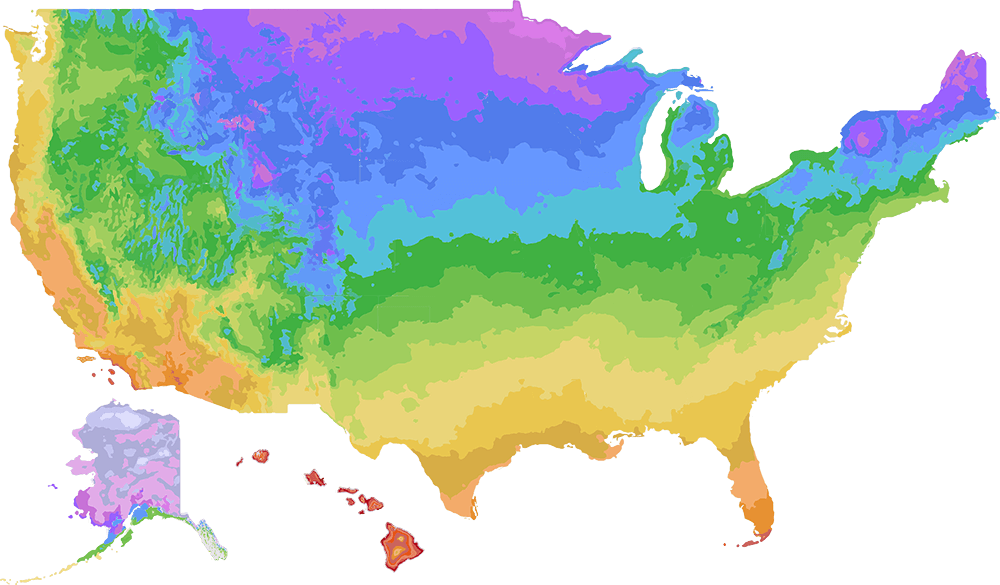
Russian sage is hardy in Zones 4-9, with winter protection recommended in colder parts of that range.
It wants full sun, 6 to 8 hours a day, in well-draining soil that's average to lean.
Space new plants 2 to 3 feet apart; most varieties reach 2 to 3 feet tall and wide at maturity.
Water regularly the first growing season, then let the soil dry between waterings once plants are established.
Cut plants back to 6 inches in early spring and leave the seed heads standing through winter for interest.
Deer generally avoid the pungent foliage, and the flowers draw hummingbirds, bees, and butterflies from mid-summer into fall.
Russian sage plant (Perovskia atriplicifolia, syn. Salvia yangii) offers carefree color, with an open, airy habit and dreamy drifts of lavender-blue flowers that bloom from mid-summer into fall, making this Russian sage plant a standout in sunny landscapes.
Russian sage is a herbaceous woody perennial or subshrub that’s easy to grow and virtually maintenance-free once established, making this Russian sage plant a favorite for gardeners researching how to grow Russian sage successfully. The attractive tubular flowers, which bloom over an exceptionally long time, are a favorite of hummingbirds, bees, and butterflies. Native to central Asia, this mint relative has silvery-green leaves that exude a pungent scent when crushed.
 Hardy in USDA zones 4-9, Russian sage plant varieties will benefit from winter protection in colder regions. Most varieties reach 2-3 feet tall and wide, though some can be larger. Russian sage has good heat and drought tolerance, making it suitable for waterwise landscapes. This versatile perennial plant is useful as filler in a mixed border and can also be planted as hedging, massed in the landscape, or in containers, as outlined in a typical Russian sage care guide.
PLANTING & CARING FOR RUSSIAN SAGE
How to plant: Russian sage thrives in hot, dry conditions and well-draining soils. Choose a site that receives 6-8 hours of full sun. Follow these steps as part of how to grow Russian sage and space plants 2-3 feet apart.
Loosen soil in the planting area and dig a hole slightly wider and deeper than the root ball.
Remove the plant from the nursery pot and loosen the soil around the roots.
Set the plant in the hole with the top of the crown level with the soil.
Backfill the hole with soil and tamp down slightly to remove air pockets.
Water well.
Soil: Russian sage prefers average to lean soil with a slightly alkaline pH, though it is tolerant of various soils. Plants may flop if the soil is too rich. Make sure there is adequate drainage to prevent root rot. For containers, use a high-quality all-purpose potting mix, a recommendation found in many Russian sage care guide resources.
Watering: Russian sage prefers medium to dry soil and is drought-tolerant once established. Overwatering can cause disease and root rot. Water regularly throughout the first growing season to encourage a deep root system as you learn how to grow Russian sage properly.
Fertilizing: Russian sage needs little or no supplemental fertilizer. If desired, lightly mulch with compost in spring, consistent with most Russian sage care guide practices.
Staking: Larger varieties are prone to flopping. A lack of light or overly rich soil can also cause plants to lean or fall over. Stake drooping stalks as needed. To prevent flopping, plant in masses or among other plants for support.
TRY THESE PROVEN WINNERS® VARIETIES
Try these varieties in your landscape:
 ‘Denim ’n Lace’ produces drifts of sky-blue flowers above gray-green foliage. The shorter stature (just 2-3 feet tall) and strong upright stems prevent plants from falling over. Flowers retain their color well into fall. The compact habit is suitable for small spaces, containers, mass plantings and hedging.
 ‘Sage Advice’ is one of the darkest of all Russian sage varieties, with rich lavender-purple flowers. Growing just 3 feet tall, the compact stature and strong upright stems prevent plants from leaning or flopping. Plant in a waterwise strip, as hedging, in containers, or to stabilize a dry slope.
RUSSIAN SAGE FAQ’s
Is Russian sage edible?
Foliage is somewhat toxic, so should be avoided for consumption. The scented leaves can be dried and used for potpourri.
When does Russian sage bloom?
Russian sage blooms for several months, from mid-summer into fall, reinforcing why the Russian sage plant is valued for long-season color.
When to cut back Russian sage?
Seed heads and stems can be left through winter for ornamental interest. Cut plants back to 6 inches in early spring, when they break dormancy.
When to plant Russian sage?
For faster growth, wait until late spring, after the soil has warmed sufficiently. Russian sage can be planted up until 6 weeks before the average first frost date in your area. Avoid planting during the hotter summer months to prevent plant shock.
Is Russian sage deer resistant?
Deer find the pungent foliage of Russian sage distasteful, so they will generally avoid it. See more deer-resistant perennials.
Is Russian sage invasive?
When planted in ideal growing conditions, Russian sage can self-sow or spread vigorously through the rhizomatous roots. Pull up seedlings or dig out roots where they’re not wanted. Newer cultivars have restrained runners and are less prone to spreading.
HOW TO USE RUSSIAN SAGE IN YOUR LANDSCAPE
The fine texture of the flowers and foliage makes Russian sage a superb background plant, while the blue or purple flower colors complement yellow and orange hues. Here are some design ideas on how to use Russian sage in your landscape:
Mass with landscape roses for a carefree combination.
Plant in drifts along a dry slope to stabilize the soil.
Use a taller form as a background element or filler in a mixed border.
Combine with other waterwise plants in a curbside strip as a low-maintenance solution for lawn turf.
Use as hedging to divide garden rooms, along pathways, or to soften a fence.
Substitute Russian sage plants for catmint or lavender, as they are similar in appearance and cultural needs.
Plant a dwarf variety as a stand-alone accent in a container.
Combine with bold-foliaged plants such as canna lily, coral bells or lady’s mantle to create contrast in the landscape.
RUSSIAN SAGE LOOK-ALIKES

Lavender vs Russian sage: Though Russian sage and lavender (Lavandula spp.) look similar and thrive in the same growing conditions, there are distinct differences. Russian sage is larger than most lavender types. Flowers are a different shape, with lavender coming in a wider range of colors and blooming earlier in the growing season. The leaves of Russian sage are larger than those of lavender. Flowers and leaves of lavender have a more pronounced sweet scent, and have a wide range of culinary, medicinal and herbal uses. The scent of Russian sage is more pungent and is primarily used for potpourri or sachets. Russian sage is hardier, so makes a good substitute for lavender in colder zones.
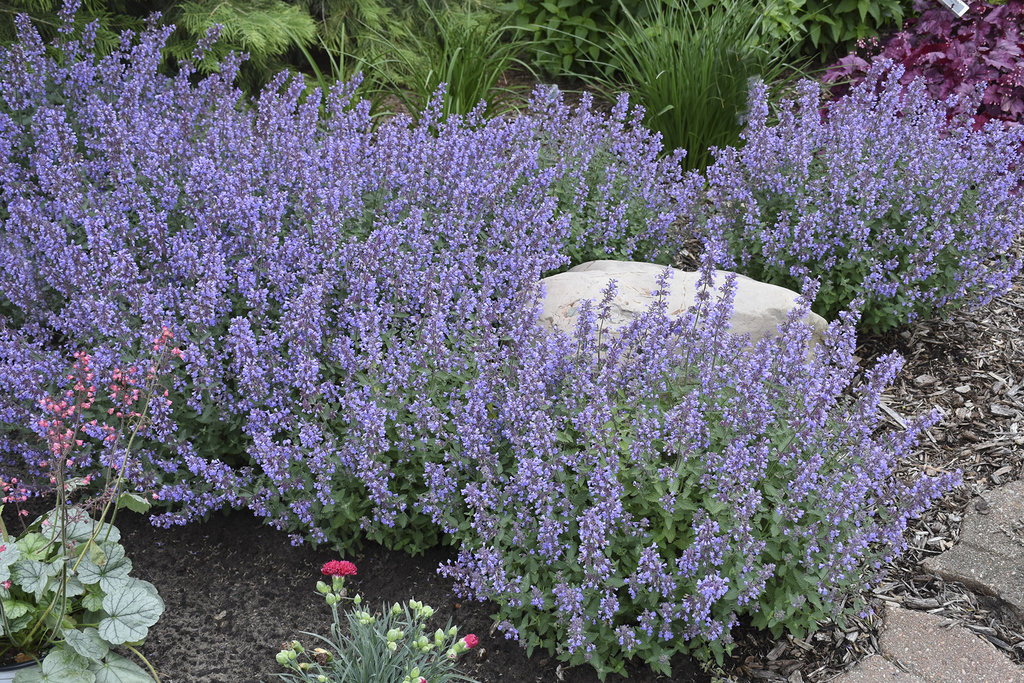 Catmint vs. Russian sage: These two perennials look even more similar, both enjoying the same growing conditions and blooming over an exceptionally long time. Catmint (Nepeta spp.) plants are smaller, about half the size of Russian sage, and start blooming earlier. The flowers of Russian sage come in purple or blue, while catmint comes in hues of blue, white, or pink. Russian sage flowers have a long, distinct tubular shape, while catmint blooms have a shorter, looser tubular shape with fringed edges. Catmint leaves are smaller and shorter, with a slightly serrated edge and a velvety appearance. Russian sage foliage is distinctly serrated, smoother, and more elongated. Russian sage is more sun and heat-tolerant, though catmint is slightly hardier, so it may be a good substitute for Russian sage in colder zones.
COMPANION PLANTS
Place Russian sage alongside other plants with similar cultural needs of full sun and good drainage.
For a low-maintenance planting, combine with:
Oso Easy® Mango Salsa rose
Winecraft Black® smokebush
Rainbow Rhythm® ‘Orange Smoothie’ daylily
Primo® ‘Peachberry Ice’ coral bells
For late-season color, combine with:
Lil Miss Sunshine® bluebeard
Prairie Winds® ‘Desert Plains’ fountain grass
Rock ’N Round™ ‘Popstar’ stonecrop
‘Tuscan Sun’ perennial sunflower
Use in a waterwise border or xeriscape alongside:
Summer Wine® Black ninebark
Prairie Winds® ‘Apache Rose’ switch grass
Pyromania® 'Backdraft' red hot poker
Meant to Bee™ Queen Nectarine hyssop