



Wet Prone Soil Problem Solved
Wet Prone Soil Problem Solved.
Wet Prone Soil Problem Solved
As a horticulturist and faculty member with Texas A & M, Mississippi State and University of Georgia I spent a lot of time problem solving--most often in trying to improve wet prone soil. Obviously, these projects could mean grading, installation of French drains, raised beds, organic amendments, and usually incorporated prepared landscape mixes. Then there was the solution that brought the angels singing, tears of joy, butterflies, hummingbirds and tantalizing fragrance. This solution is called ‘The Right Plant for the Right Place'.
Proven Winners® has so many plants available for wet prone soil I can only deal with about four favorites, four aces if you will, in this allotted space. Despite the fact that these are native to a wide geographic area, it is a rarity for me to find even one in the landscape.
Take for instance Sugar Shack®, a wonderful compact fragrant flowered buttonbush known botanically as Cephalanthus occidentalis. The buttonbush is native to all but 11 of the lower 48 states. This is one of those plants that if you looked at the bloom through a pair of binoculars or a telephoto lens you would move it to the top of your must-have list.
 |  | 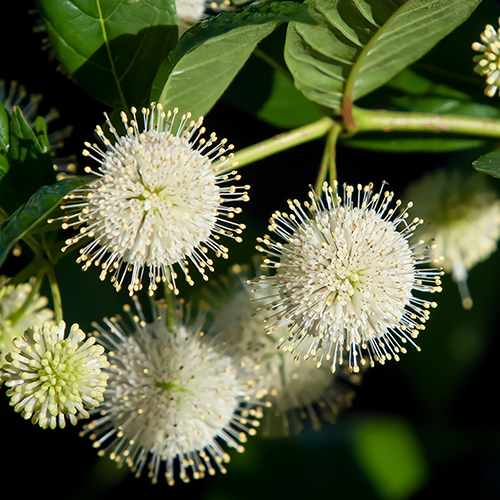 |
Sugar Shack,® and all buttonbushes, bring in a host of butterflies, most considered among the most beautiful. According to Texas A&M, 24 species of birds will feed on the resulting seeds. Incredibly those grown at the water's edge also feed waterfowl.
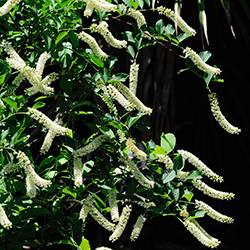
The native summersweet or sweet pepperbush known botanically as Clethra alnifolia, is also a native with a huge geographic range. None of those common names do the plant justice. Proven Winners® however offers two varieties whose names tell the whole story. They are Vanilla Spice® and Sugartina® Crystalina, offering one of the top olfactory experiences of a lifetime.
 |  |  |  |
Fragrance isn’t all as these white flowered bottlebrush spikes bring in more bees and butterflies than almost any other shrub available to the landscape. Vanilla Spice® can reach 6 feet in height while Sugartina® Crystalina will top out at three feet. My Vanilla Spice® is planted in proximity to a Japanese Maple that turns red in the fall, partnering with the Vanilla Spice® turning yellow.
The Virginia sweetspire, known botanically as Itea virginica, is seen in more landscapes than the first two, but are not even close to the plant’s true potential in landscapes everywhere. It is native to over 20 states from Maryland to the South. We’ve used them in areas where water runoff from buildings keeps the soil moist, thus stopping the potential for erosion in its tracks. It forms thicket-like branching but not to the point of a problem looking to develop.
 | 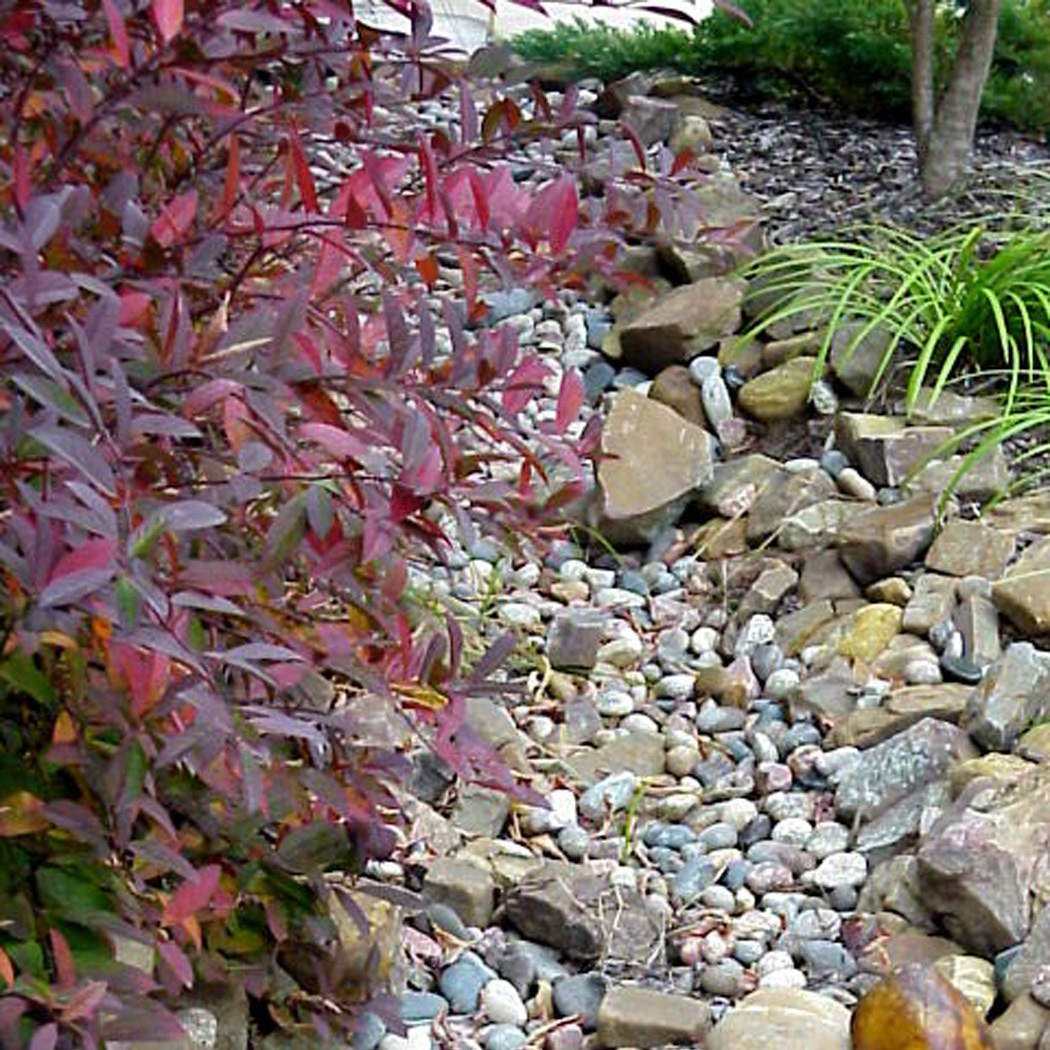 | 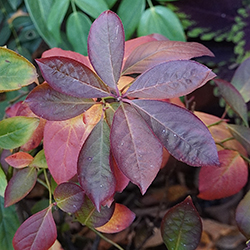 |  |
Virginia sweetspire, also known as Virginia willow, are delightfully fragrant flowered shrubs where the long white tassel-like blooms are like little perfume factories. If you don’t think fragrant, consider Proven Winners® varietal name Scentlandia®, that says it all. Like Scentlandia®, the variety Little Henry® also gets about 3-feet tall with longer blooms and should be rated as champion for its blazing fall red color with leaves holding extra-long into the season.
Proven Winners® newest Virginia sweetspire, is the compact Fizzy Mizzy®. Though it may sound like a bad hair day, it is really a one of a kind, whereby the white blooms borne by the dozens are held erect, giving a most unusual look in the landscape.
At the Coastal Georgia Botanical Gardens on the edge of the Shade Garden where sun and shade converged and the soil always moist, a sweetshrub, a native Calycanthus hybrid, was chosen. As you walked the pathway in the garden the aroma told you to be on the lookout for a horticultural wonder.
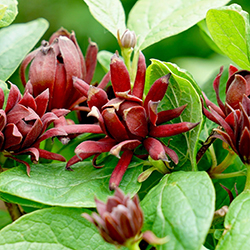 |  | 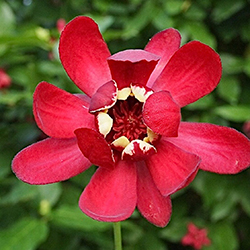 |
Sweetshrub also known as Carolina allspice is seen most often in old home landscapes but Proven Winners® is about to change that with this year’s new introduction Simply Scentsational®. After thousands of sniffs ‘Plant Hunter’ Tim Wood, says this is the nicest smelling sweetshrub in the market. Reaching 72 inches tall, this sweetshrub will be adorned with burgundy red blossoms reminding you of melon, strawberry and banana fragrances, or depending on what your nose knows, it might be juicy fruit gum. Oh yes you may want give the 10-foot tall, Aphrodite® a try too.
Now you see that wet prone soils are really no problem at all, they are wonderful opportunities for plants that offer fragrance, bees butterflies and untold beauty. Follow me on Facebook @NormanWinterTheGardenGuy for more photos and garden inspiration!