



Rain Garden
A rain garden's basin collects and holds storm water for a short period of time, usually less than 24 hours.

Rain Garden
Firefly Peach Sky is trendy in that it is the Pantone Color of the Year but also that yarrow is perfect in a rain garden situation.
A rain garden's basin collects and holds storm water for a short period of time, usually less than 24 hours. The soil absorbs the water and any pollutant particles. Proven Winners perennials like Upscale Monarda, Tuscan Sun heliopsis, Luminary phlox, Firefly yarrow and Storm Cloud amsonia, the Landscape Perennial of the Year, could all fit in a rain garden and help filter out the pollutants while providing water to the stems and leaves. The water evaporates back into the atmosphere from the plants.
|
|
|


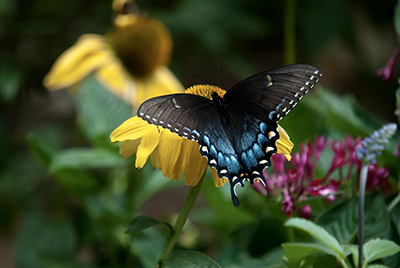
By using native plants like these, rain gardens provide important habitat to a broad array of wildlife, including bees, butterflies, spiders, frogs, toads, lizards and birds. Even though our demonstration Rain Garden was small it was like a miniature zoo, creating excitement and photo opportunities for those of all age groups. Since these are natives that are adapted to the climate and soils, they require less water and need little or no fertilizers and pesticides, which is a plus for the environment.
Even perennials like the Color Coded coneflowers would be well suited to locations higher up the basin, the so-called wall of the rain garden. While I am touting perennials for pollinators, Proven Winners also has shrubs that make almost every state’s list for best rain garden plants.
Imagine a rain garden where the Fizzy Mizzy or Scentlandia sweetspire (Itea) is blooming and permeating the surrounding area with its intoxicating fragrance. Then, there are the equally fragrant and exotic looking Sugar Shack buttonbush (Cephalanthus) and Vanilla Spice summersweet (Clethra) offering you the best of all worlds, native perseverance, beauty and a pollinator haven.
You may have a natural area that would not require much work from the standpoint of machinery or dirt moving. You will need to make sure the plants you select are suited for the sunlight you will be providing. Rain Gardens combine the benefits of reducing or managing stormwater runoff with the appeal and scenic beauty of a garden. This has the potential of being the most enjoyable feature on your property. I hope you might give it a try. Below are two university publications to help you get the ball rolling in the thought process.
http://extension.msstate.edu/rain-gardens
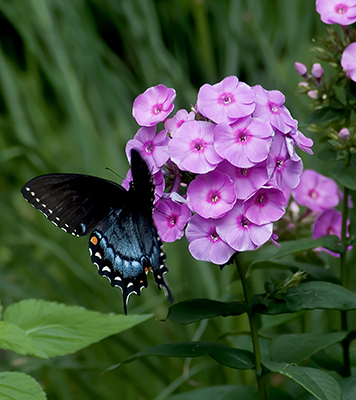 Phlox of all species including the tall garden phlox are found in such low areas. Luminary Prismatic Pink is making its debut this year and hand has already demonstrated it is on the butterfly menu. | 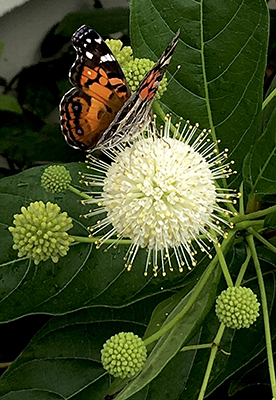 Shrubs are also on the list for Rain Gardens and one of the best is Sugar Shack buttonbush (Cephalanthus). The flowers are exotic and fragrant and its compact habit will help it fit in any size of Rain Garden. |  The native Clethra or summersweet varieties like Sugartina Crystalina fits even small rain gardens too. You will be mesmerized by the fragrance as the butterflies feed with passion. |